
Korea takes waste separation seriously, and getting it wrong is one of the most common early mistakes for newcomers — sometimes with a fine attached. The good news: once you know the four basic categories and where to buy the right bags, it becomes routine. This guide covers general waste, food waste, recycling, and bulky items, plus how the rules vary by district and the mistakes to avoid in your first week.
The Four Categories You Need to Know
Almost everything you throw away in Korea falls into one of four streams, and they’re handled differently:
- General waste — non-recyclable trash, in a paid volume-rate bag
- Food waste — kept separate, in a designated food-waste bag or container
- Recycling — sorted by material, usually free
- Bulky waste — furniture and appliances, with a paid sticker
Your building will have a set collection point and, often, set days — check with your landlord or building manager when you move in.
General Waste and the Jongnyangje Bag (종량제봉투)
General household trash that can’t be recycled goes into a jongnyangje bag — the official volume-rate garbage bag you pay for. Buy them at any convenience store or supermarket, in sizes from a few liters up to 100. The important catch: these bags are district-specific, so a bag bought in one gu (district) may not be accepted in another. Ask for your district’s bag, and only trash that isn’t recyclable or food waste goes inside.
Food Waste (음식물 쓰레기)
Food waste is collected separately from general trash. Depending on your building, you’ll use special food-waste bags, a dedicated bin, or an RFID food-waste machine that weighs your waste and charges by weight. As a rule of thumb, anything an animal could eat is food waste — but there are common exceptions that go in general waste instead:
- Large bones and meat bones, and shells (clams, oysters, eggs)
- Fruit pits and hard seeds, onion and garlic skins
- Tea bags, coffee grounds in some districts, and toothpicks
Rules vary slightly by district, so when in doubt, check your building’s guidance or your district’s app. Our food waste guide goes through what counts and what doesn’t, item by item.
Recycling (재활용)
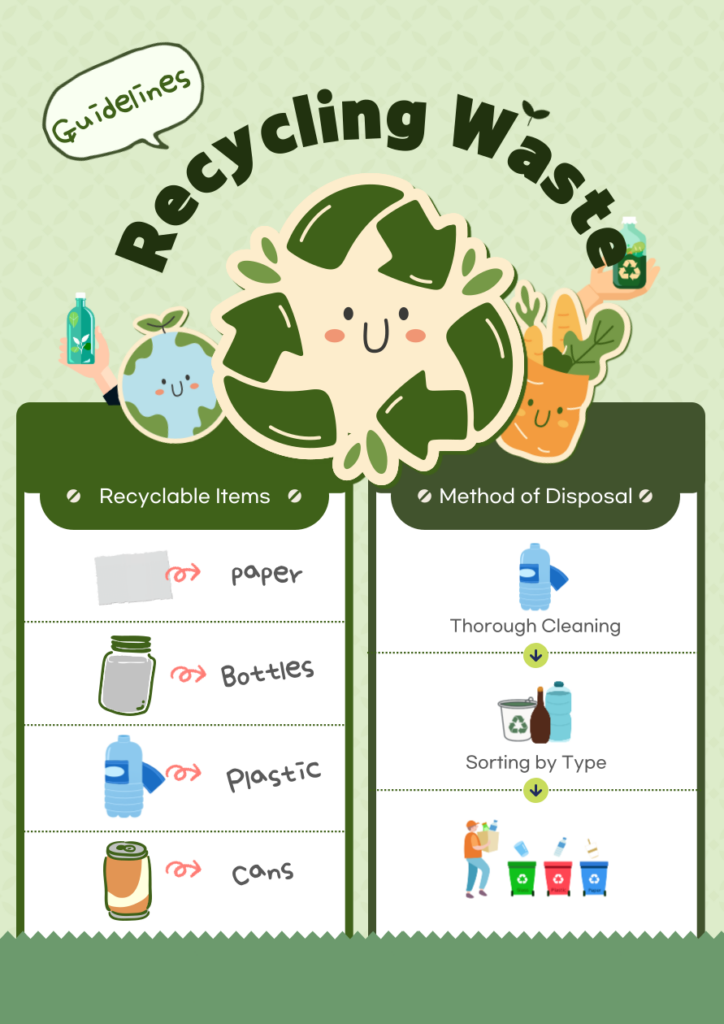
Recycling is sorted by material and is usually free. Rinse containers first and flatten what you can:
- Paper and cardboard (flatten boxes)
- Plastic, and clear PET bottles separately (label removed, cap back on)
- Glass bottles and metal cans
- Vinyl and plastic film (bags, wrappers)
Put recycling out at your building’s collection point on the designated day; some buildings have labelled bins available every day. For the material-by-material rules — paper, glass, cans, vinyl and styrofoam — see our recycling guide.
Bulky Waste (대형폐기물)
Furniture, mattresses, and large appliances can’t go out with regular trash. You buy a bulky-waste sticker (폐기물 스티커) for each item — through your district office (dong office), its website, or a waste app — write the given number on the item, and leave it at the designated spot on the collection day. The fee depends on the item’s size and type. Large appliances can often be collected free through a separate national appliance pickup service. For the full step-by-step online reporting process, see our bulky waste disposal guide.
Where to Buy Bags and Check Your Rules
Because bags and some rules are set by each district, the fastest way to get it right is local: buy jongnyangje and food-waste bags at the nearest convenience store or mart and ask for your gu, and confirm your building’s collection point and days with your landlord or manager. Many districts also have an app for bulky-waste stickers and schedules.
Common Mistakes to Avoid
- Using a bag from the wrong district — it may be left uncollected
- Putting bones, shells, or fruit pits in food waste instead of general waste
- Not rinsing recyclables, or leaving caps and labels on PET bottles
- Putting bulky items out without a sticker
- Missing your building’s collection day
Frequently Asked Questions
Q: What are the waste categories in Korea?
There are four: general waste (in a paid volume-rate bag), food waste (kept separate), recycling (sorted by material), and bulky waste (with a paid sticker). Each is collected differently.
Q: Where do I buy Korean trash bags?
Jongnyangje general-waste bags and food-waste bags are sold at convenience stores and supermarkets. They’re district-specific, so ask for your gu’s bags — a bag from another district may not be accepted.
Q: What counts as food waste in Korea?
Anything an animal could eat is generally food waste. Common exceptions that go in general waste include large bones, shells, eggshells, fruit pits, and onion or garlic skins. Rules vary a little by district.
Q: How do I throw away furniture or large appliances?
Buy a bulky-waste sticker from your district office, its website, or a waste app, attach it, and leave the item at the designated spot on collection day. Large appliances can often be picked up free through a national service.
Getting Settled In Korea
Sorting your waste correctly is a small thing that makes daily life smoother — and it’s one of the first routines you’ll set up. For the rest of your first week, see our move-in setup guide. And if you’re still looking for a place, tell us what you need through our inquiry form and we can help you find one that fits.
Browse Available Properties on Ziptoss →
Explore the Seoul rental map, filter by area, and inquire directly.